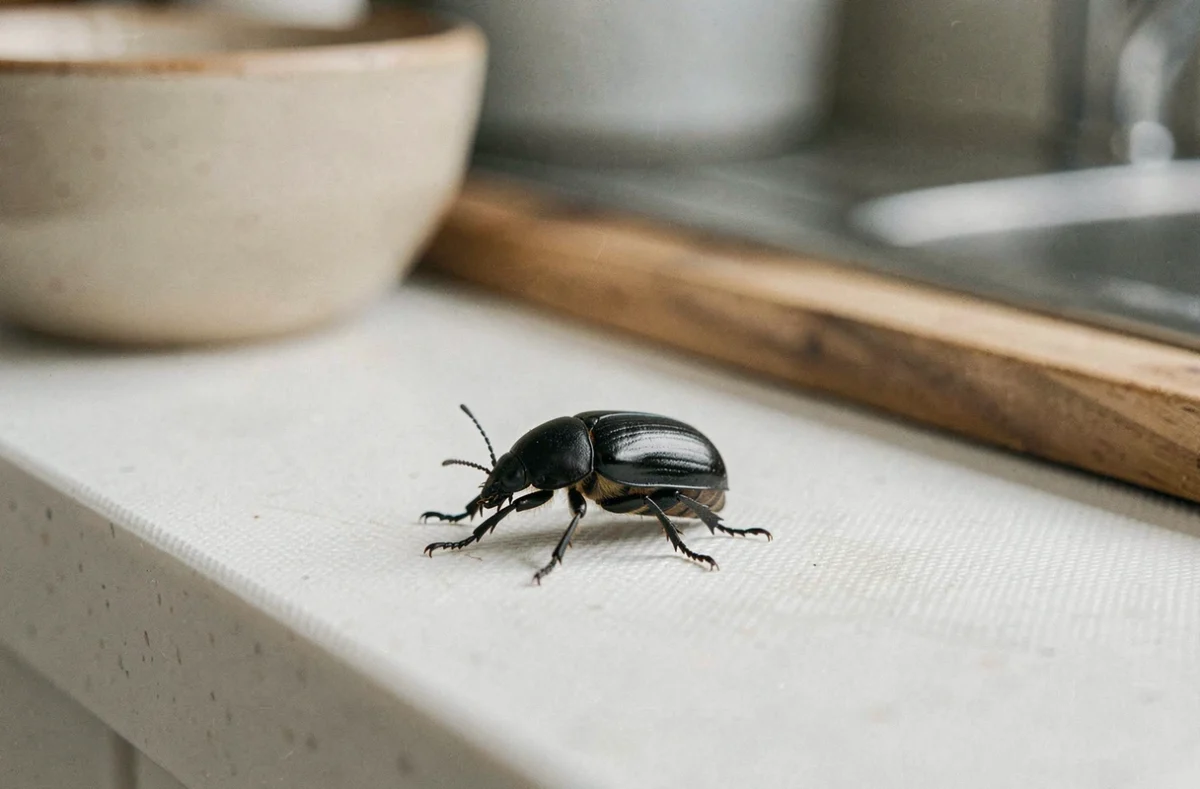
A small, round black beetle perched on a windowsill does not necessarily mean there is a colony established in your cupboards. Carpet beetle adults fly toward light and enter through openings, so an occasional sighting may be harmless. Signs of an active infestation are found elsewhere—in corners, textiles and areas where organic debris accumulates. Knowing how to read these clues can completely change how you respond.
Shed skins, silk and droppings: clues the insect you spotted won’t reveal
Reliable identification of an infestation depends less on the insect itself than on what it leaves behind. An adult carpet beetle is just a few millimetres long, has a domed oval shape and can easily be mistaken for another harmless beetle. Focusing your inspection on the captured insect often leads nowhere.
The larvae leave behind brown, bristly shed skins that can be found near damaged textiles. These cast skins are the clearest sign of a carpet beetle infestation. Silk threads or cases near the damage point instead to clothes moths, which calls for a different treatment approach.
Before treating anything, turn over rugs and inspect curtain seams, skirting boards and the undersides of heavy furniture. Also look for droppings: tiny dark grains clustered near chewed fibres. This visual check takes just a few minutes and can help you identify a small, round black insect in your home without immediately calling in a professional.
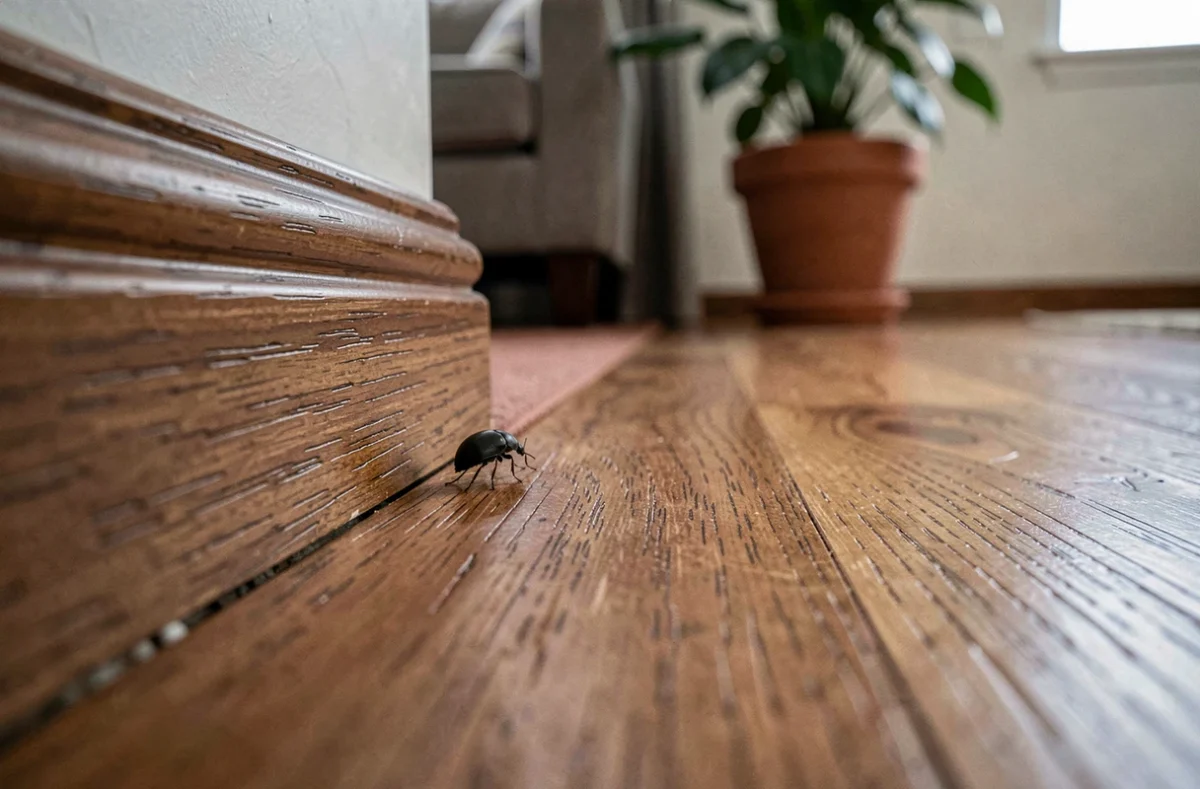
Carpet beetle, wood weevil or black rove beetle: how to tell them apart
Three species are commonly found in French homes and share a “small, black, round” appearance. Mistaking one for another can lead to the wrong treatment.
- Carpet beetle: oval body measuring 2 to 4 mm, with wing cases sometimes mottled brown or white; adults are attracted to light. They damage wool, silk, feathers and other animal-based textiles. The slow-moving, hairy larvae are found in dark areas.
- Wood weevil: elongated body with a distinctive snout, although some species can look almost round to the naked eye. Exit holes in wood (furniture, roof timbers or flooring) and the presence of wood dust confirm the diagnosis.
- Black rove beetle: flexible abdomen and short wing cases that do not cover the whole body. It preys on other insects and causes no damage to belongings. Its presence often points to a population of prey insects in the home rather than a problem caused by the beetle itself.
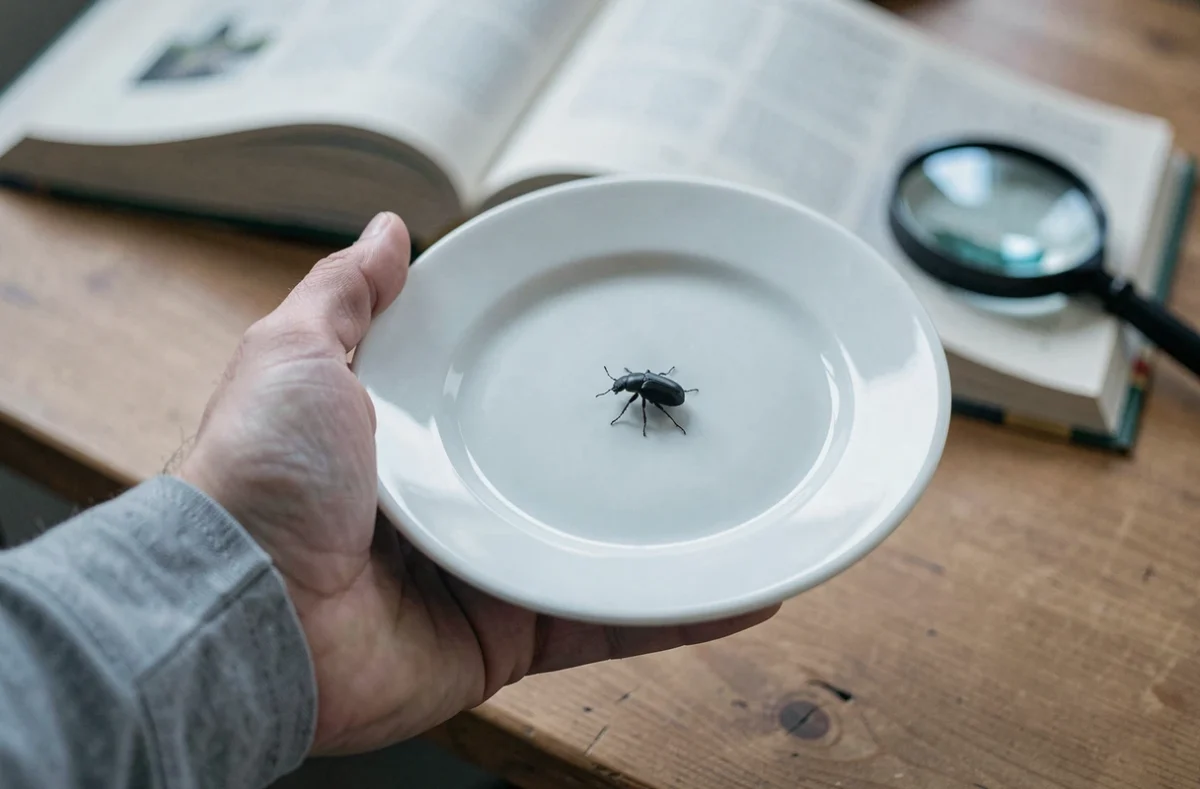
The weevil’s snout and the rove beetle’s short wing cases are distinguishing features visible through a magnifying glass or in a close-up photo taken with a phone. If neither is present, a domed oval body points to a carpet beetle.
Established infestation or isolated insect: find the source before taking action
A single adult near a window does not warrant chemical treatment. Adult carpet beetles feed outdoors and may enter the home by chance. This is common in spring and early summer, when they take flight.
An established infestation, by contrast, is indicated by a combination of signs: live larvae, accumulated shed skins, surface fibres cut through and small bare patches on rugs or stored clothing. The damage tends to be concentrated in specific spots, rarely in the middle of a room.
Overlooked areas that sustain a colony
Larvae feed on more than just wool and silk. They also thrive on organic debris that accumulates out of sight: pet hair, dust, dead insects, feathers in an air duct or even an old bird’s nest beneath the eaves. If larvae reappear after cleaning, look for this hidden food source rather than vacuuming the same spot repeatedly.
An unmaintained air duct or an inaccessible crawl space can be a common reservoir. As long as this food supply remains, the larvae will return.
Choosing the right textile treatment: temperature, care labels and limitations
A common instinct is to wash everything that has been in contact with the larvae at a high temperature. This works for cotton or polyester, but washing delicate or valuable textiles at too high a temperature can ruin them. Always check the care label before choosing a cycle.
For items that cannot be washed (antique rugs, furs or framed pieces), placing them in the freezer for several days is a documented alternative. Bulky or fragile items may need to be handled by a professional cleaner or textile conservation specialist.
Vacuum before using any product
Thoroughly vacuuming infested areas, including skirting boards, physically removes larvae, shed skins and eggs. This should be the first step, before using any insecticide. Empty the vacuum bag or canister outside immediately to prevent reinfestation.
Insecticides should not be the first resort. They may be appropriate if the infestation persists despite thorough cleaning and removal of the food source. If so, use the product according to its label, targeting the identified hiding places rather than treating the entire room.
If you spot a small, round black insect in your home, inspect textiles and hidden corners methodically rather than reacting in a panic. Shed skins and the location of the damage tell you far more than the insect itself. Removing the food source is the most effective long-term way to prevent reinfestation.