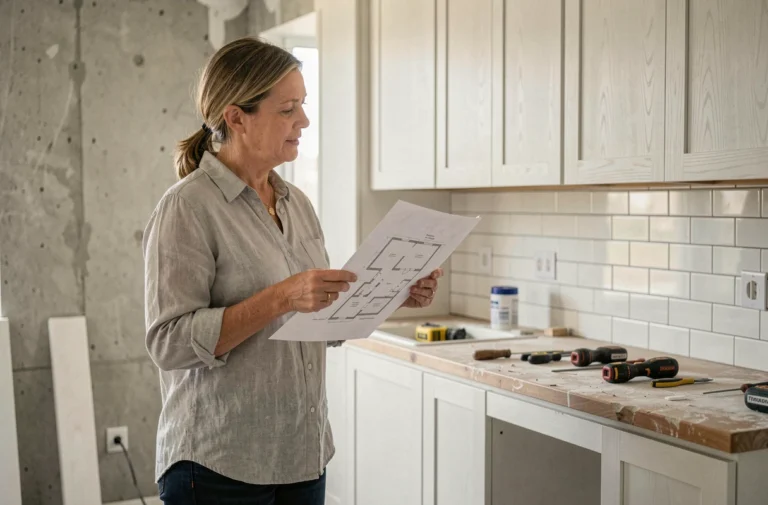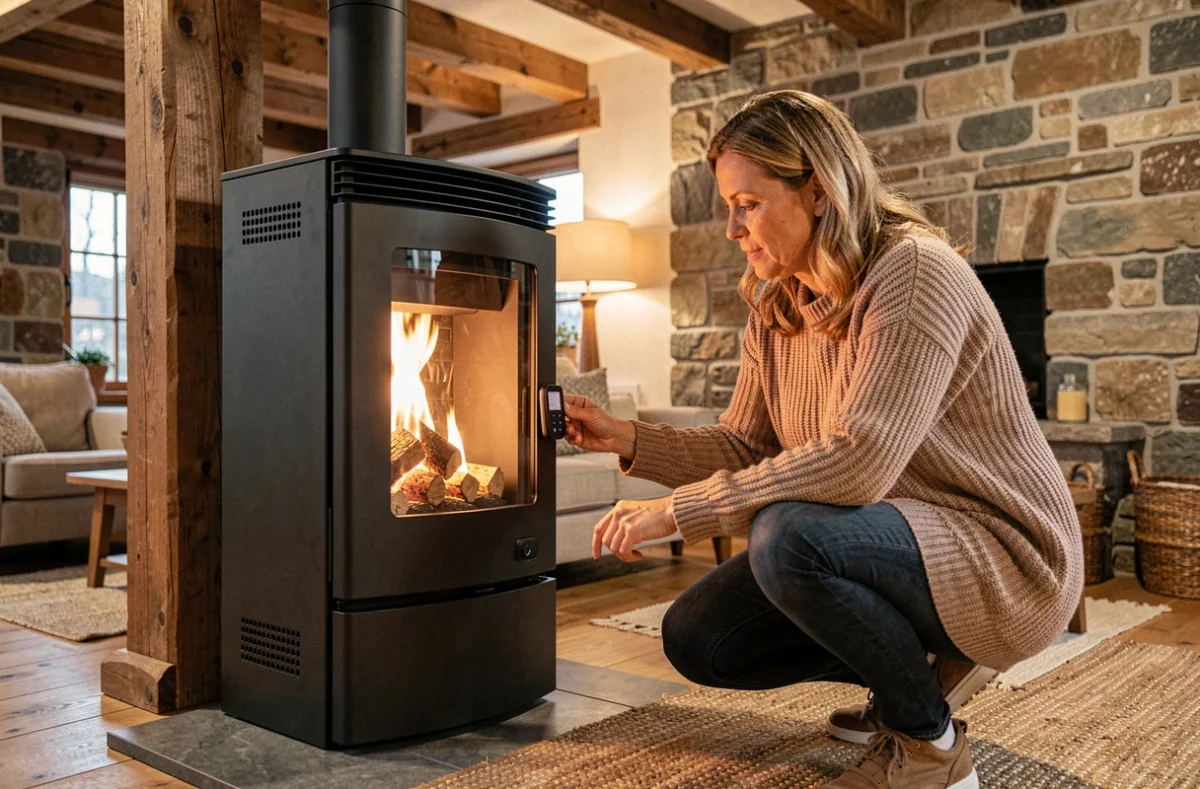
In a 1980s house with partial insulation, a pellet stove can use two to three times more fuel than stated on the technical data sheet. The efficiency rating published by the manufacturer reflects laboratory conditions, not a poorly insulated living room where heat escapes through the roof and windows.
Before choosing a pellet heating system, the calculation needs to be approached differently: not by looking at the price of the appliance, but at what it will actually cost over five or ten years, including maintenance and fluctuations in pellet prices.
The real cost of pellet heating over several years
Wood pellet prices started rising again in 2026, and the seasonal dip usually seen in spring did not happen this year. For a household that uses several tonnes each winter, this volatility can radically change the economics.
Fuel is only part of the bill. Since October 1, 2023, Decree No. 2023-641 has required the appliance to be serviced and the flue to be swept at least every twelve months. Some local regulations may require more frequent servicing. Including mandatory maintenance in the annual budget is the only way to get a realistic cost estimate.
A pellet heating system from Chauffage Pellets lets you compare different setups and estimate consumption based on the type of appliance and the area to be heated.
In a poorly insulated house, higher pellet consumption can wipe out the cost advantage over gas. It is often clear that insulating the attic and windows determines whether a stove is cost-effective, not the other way around. Investing in a high-end appliance without addressing heat loss is like heating the garden.
Efficiency and seasonal performance: the figures that matter
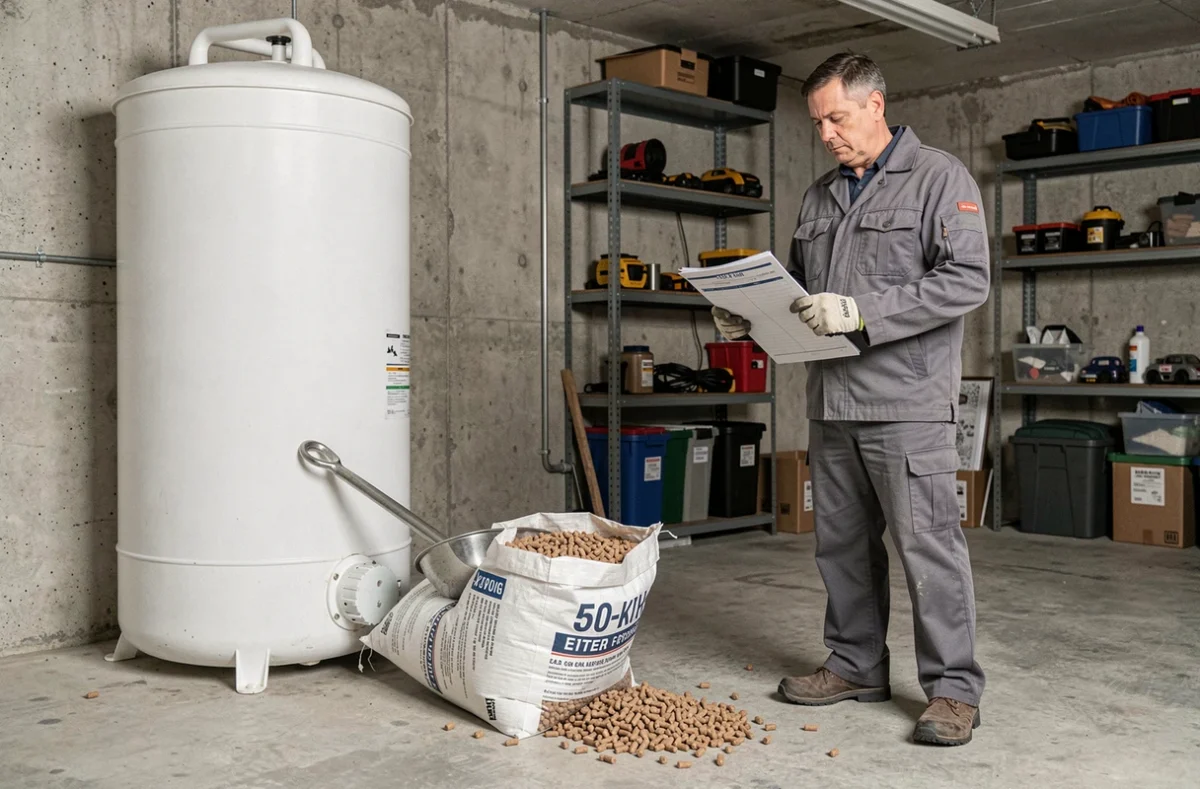
Manufacturers advertise high combustion efficiency ratings. This figure measures how effectively the firebox converts pellets into heat, but it does not reflect losses during real-world operation over an entire season. The figure to look at is seasonal energy efficiency (Etas).
This has a direct impact on financial incentives. The CEE BAR-TH-112 specification requires an Etas of at least 80% for a pellet stove to qualify for the CEE grant. The European Ecodesign threshold is 79%. So a model that is legally sold may still fall short of the CEE threshold.
Before signing a quote, check the exact Etas on the product’s technical data sheet, not in the sales brochure. A one-percentage-point difference can mean losing several hundred euros in grant money.
Emissions and air quality
Wood pellets are not an emissions-free fuel. Fine particles, carbon monoxide and volatile organic compounds depend on the appliance, as well as the fuel quality, settings and condition of the flue. A well-maintained, modern stove burning certified pellets (DINplus, ENplus A1) limits these emissions, but does not eliminate them.
Pellet stove or pellet boiler: two different approaches
A pellet stove mainly heats the room in which it is installed. A pellet boiler supplies a central hot-water heating system connected to radiators or underfloor heating. The choice between the two should be based on how you want heat distributed, not on efficiency ratings.
- A stove works as the main heating source in a compact home, or as supplementary heating in a large house that already has a central heating system.
- A pellet boiler replaces an existing oil or gas boiler and requires space for a storage silo (several square metres of floor space).
- Available incentives (MaPrimeRénov’, CEE, reduced VAT) may vary depending on the equipment being replaced and the type of appliance installed.
The choice depends on the existing heat distribution system, not just the purchase price. Replacing an oil boiler with a pellet boiler is often simpler than installing a hydronic heating system from scratch to work with a stove.
Power and sizing: avoid oversizing
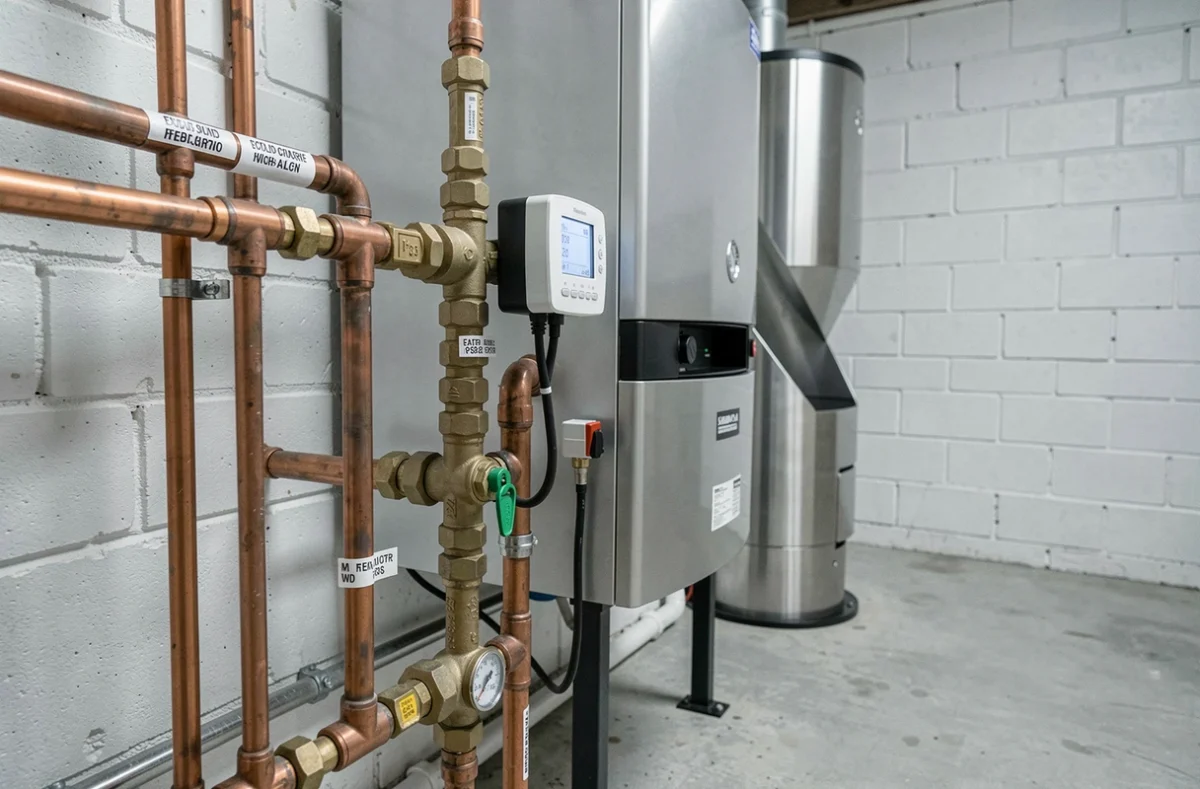
It is common to see 12 or 14 kW stoves installed in rooms that only need 6 or 8 kW. An oversized appliance runs at low output, which impairs combustion, causes soot to build up in the firebox and increases emissions. Thermal comfort does not improve—in fact, it is often worse: the room overheats, the windows are opened, and the cycle starts again.
Practical sizing criteria
The required output depends on the floor area, ceiling height, insulation level and climate zone. For a newer or well-renovated home, a moderate output is usually sufficient. For an older house, improve the thermal envelope first, then size the appliance.
- Request a thermal assessment, or at least a basic energy evaluation, before choosing the output.
- Check that the installer is RGE-certified, a requirement for accessing financial incentives.
- Choose a modulating appliance that can reduce its output to 30 or 40% of its rated capacity, allowing it to run steadily.
- Make sure the flue (diameter, draft and airtightness) is compatible with the model you choose.
A properly sized stove uses less fuel and lasts longer. The cost of a preliminary thermal assessment can be recouped after just a few seasons of optimized operation.
Total budget: what sales brochures leave out
The purchase price of a pellet stove varies considerably depending on the brand, output and features (programming, Wi-Fi, automatic cleaning system). But three additional costs affect the total budget.
Installation by an RGE-certified professional accounts for a significant share of the initial investment. Connecting the stove to the flue, creating a fresh-air intake and commissioning the appliance are not jobs to improvise.
Mandatory annual maintenance (flue sweeping and appliance inspection) costs a fixed amount each year, regardless of how much the stove is used. Wear parts also need replacing: the ignition element, door seal, burn pot and exhaust fan. Over ten years, these recurring costs can make up a significant share of the total cost.
Pellet prices fluctuate too. In the past, households that bought their annual supply in a single summer delivery benefited from lower prices. In 2026, this strategy did not pay off because prices did not fall in spring. Diversifying suppliers and comparing prices per delivered tonne remain the only practical ways to keep costs down.