Bossa nova is built on a harmonic foundation inherited from jazz, filtered through a rhythmic approach rooted in Rio’s samba. To reduce the genre to background music is to overlook the complexity of its voicings, the role of often-forgotten musicians, and the physical spaces that made its emergence in Rio de Janeiro possible.
Harmony and batida: the technical grammar of bossa nova
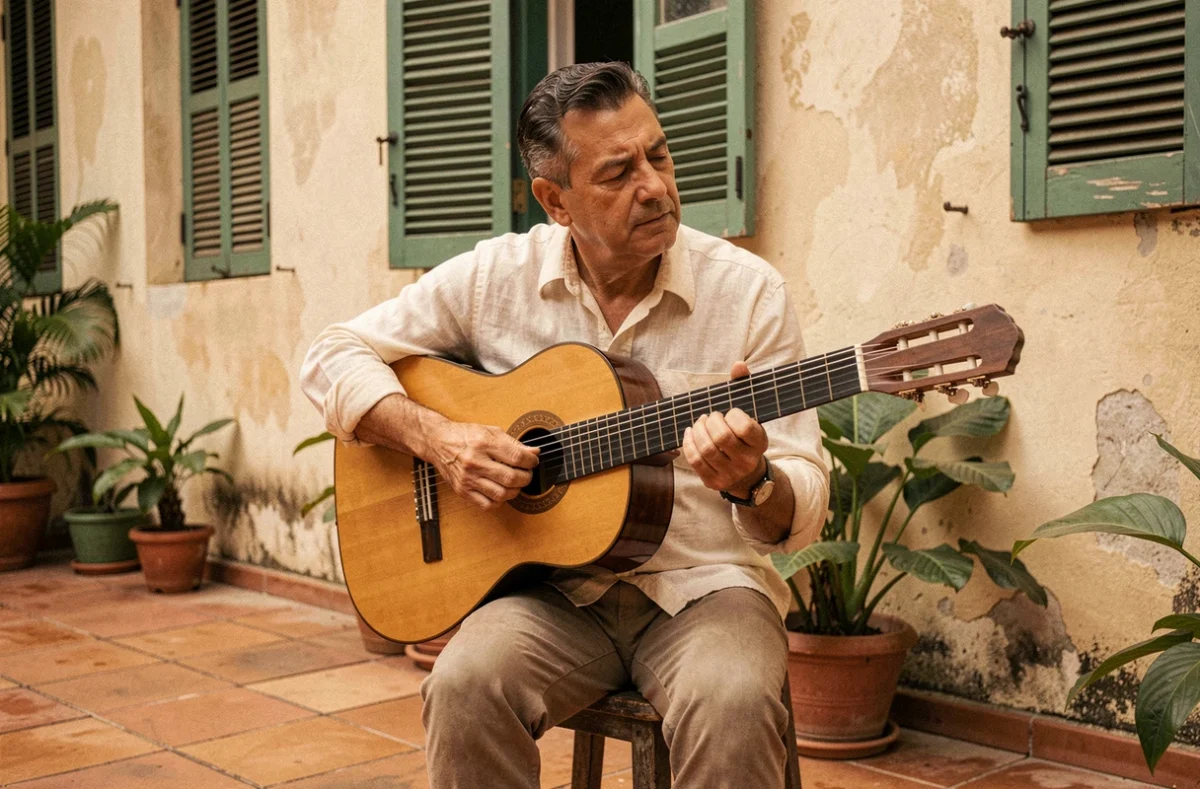
Bossa nova guitarists don’t simply strum chords. They play a syncopated batida that fuses melody and percussion in a single right-hand motion. The thumb carries a moving bass line while the index and middle fingers strike extended chords, often featuring ninths, augmented elevenths, or added sixths.
This guitar style differs from traditional samba in its lack of heavy percussion. The rhythm comes from shifting accents within the measure, not from piling on percussion instruments. Sung close to the microphone, the voice takes on a conversational tone, without vibrato, allowing each harmonic interval to be heard.
The chord progressions borrow tritone substitutions and chromatic bass movements from jazz, while retaining a short form (often AABA) and moderate tempos. The resulting sound—harmonically rich yet spacious in texture—became recognizable from the very first bars. At nouvellebossastudio.com, this legacy lives on in productions that extend the approach without confining it to a nostalgic format.
Bossa nova artists left out of the official story
The genre’s history is almost always told through João Gilberto, Tom Jobim, and Vinicius de Moraes. This trio produced landmark compositions, but the scene that made bossa nova possible was much broader.
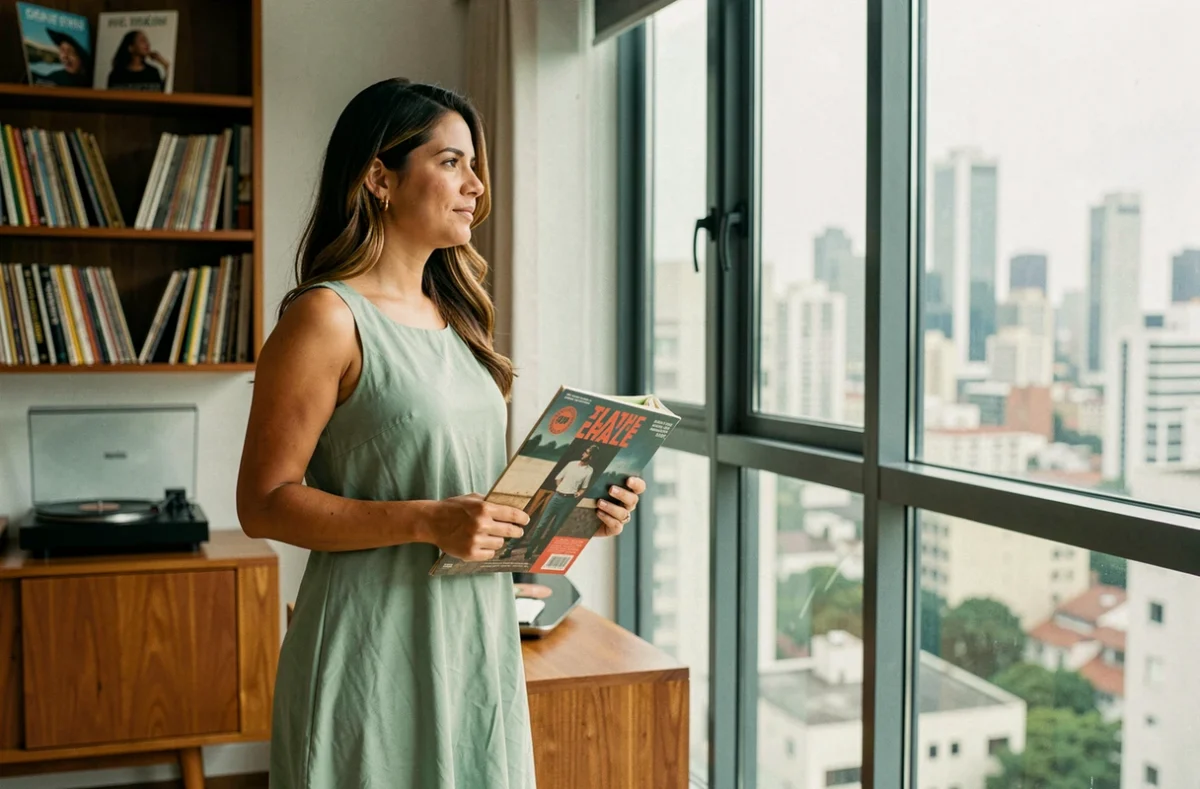
Nara Leão opened her Copacabana apartment to gatherings of musicians. These informal sessions served as a laboratory where harmonic ideas and lyrics circulated before reaching the studios. Without this private home turned communal space, the genre might have taken shape in a very different way.
Several women contributed to the rise of bossa nova without receiving the same recognition:
- Sylvia Telles, whose vocal phrasing anticipated the genre’s characteristic restraint, recorded songs as early as the late 1950s
- Maysa brought a dramatic intensity that contrasted with João Gilberto’s detached tone, broadening the movement’s emotional range
- Alaíde Costa, a performer with rare rhythmic precision, helped establish the repertoire without receiving visibility comparable to that of her male counterparts
We can see this imbalance in recognition persisting in today’s playlists and compilations, where the same three names dominate the bill.
Bossa Nova concert at Carnegie Hall: a less unanimous reception than the usual story suggests
The Bossa Nova: New Brazilian Jazz concert at Carnegie Hall is often presented as the genre’s moment of international recognition. That’s where the usual account ends. Whitney Balliett’s review, published in The New Yorker on November 24, 1962, tells a different story.
Balliett criticized the event’s heavy-handed commercial promotion and judged several performances uneven. This reservation doesn’t diminish the concert’s importance, but it reminds us that the American reception of bossa nova was marked by tensions from the outset.
American jazz saw this Brazilian genre as both a harmonic cousin and a competitor in the record market. Collaborations between Brazilian musicians and jazz players—led by Stan Getz—produced successful albums, but they also shifted the genre’s center of gravity toward a smoother sound tailored to the North American market. Bossa nova recorded in the United States differs considerably from the music played in Copacabana’s clubs.
Beco das Garrafas and the living spaces of bossa nova in Rio
Bossa nova wasn’t born in a studio. It took shape in specific physical spaces in Rio de Janeiro, the most iconic of which remains Beco das Garrafas, a Copacabana alley lined with small clubs.
This was the stage where musicians tried out their compositions before a small, discerning audience. The close proximity of performers and listeners called for low volume, reinforcing the genre’s intimate aesthetic. Beco das Garrafas still hosts concerts, making it a living space for passing on the music, not simply a heritage site.
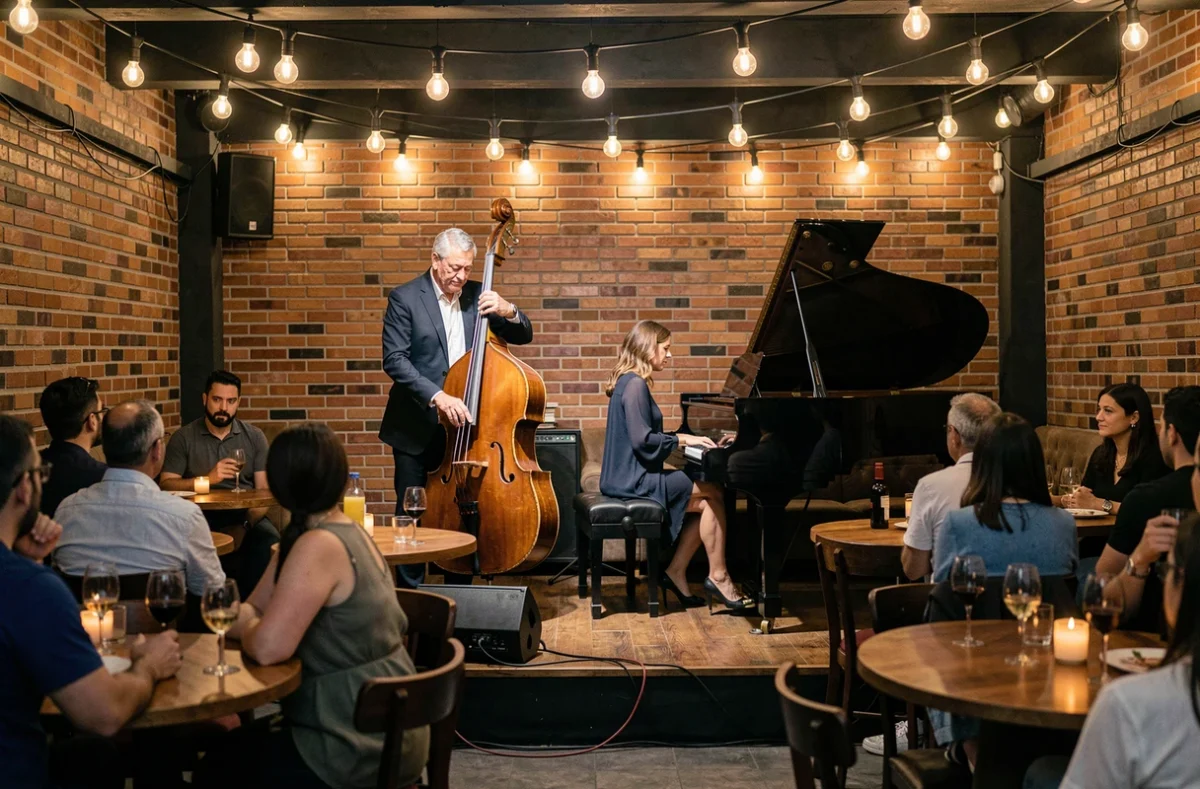
Bossa nova’s legacy also lives on through instrumental and transnational reinterpretations. Musicians revisit the repertoire through other harmonic traditions, from contemporary jazz to classical music. This process of reinterpretation keeps the genre alive, far removed from the mood-music compilations that dominate streaming platforms.
Televised festivals and the diversification of Brazil’s music scene
Bossa nova also helped transform Brazilian song beyond its own circle. The rise of televised festivals in the 1960s brought artists from different musical currents into the spotlight. Elis Regina’s success with Arrastão in 1965, followed by A Banda and Disparada sharing first place in 1966, illustrates the coexistence of multiple styles within Brazilian popular music.
This diversification would not have reached the same scale without the groundwork laid by bossa nova. By bringing sophisticated harmonic writing into popular song, the movement raised the level of musical sophistication expected by Brazilian audiences.
Reducing bossa nova to pleasant background music for cafés and hotel lobbies erases this depth. The genre remains a complex musical form, rooted in specific places and carried by artists whose diversity deserves to be heard, shaped by aesthetic debates that remain as relevant as ever.