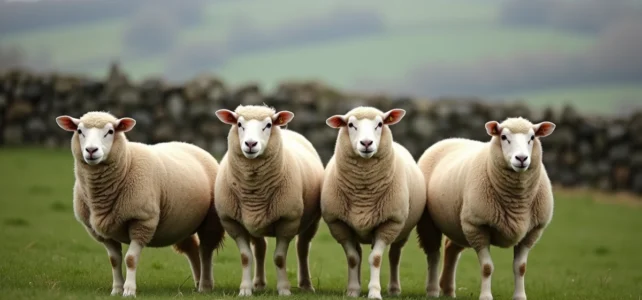
The Exlana sheep remains relatively unknown to the general French public, but it is generating increasing interest among breeders focused on extensive and sustainable systems. Developed in the United Kingdom, the Exlana stands out for a rare characteristic: it naturally sheds its fleece without the need for shearing. This feature, far from being anecdotal, redefines the economics of sheep farming and opens up under-exploited agro-ecological avenues.
Parasite Resistance of the Exlana: What Extensive Trials Show
Managing internal parasites represents a significant expense and workload for sheep farmers. Anthelmintic treatments, administered several times a year for most conventional breeds, pose a double problem: their cost and the development of resistance among targeted parasites.
According to an INRAE study published in October 2024, titled “Sheep Breeds and Animal Health,” the Exlana outperforms breeds like the Ouessant in resistance to internal parasites without systematic chemical treatments, under extensive conditions. This result places this breed in a unique category for farmers looking to reduce their dependence on veterinary inputs.
To delve deeper into the specifics of the Exlana sheep on Animal News, the combination of hardiness and low need for health intervention is a strong argument in a context where European regulations push to limit the use of antibiotics and antiparasitics in farming.
This natural resistance can be partly explained by the genetic selection carried out over several decades. Exlana lines have been chosen for their ability to maintain a low parasite load, even on wet pastures conducive to gastrointestinal strongyles.
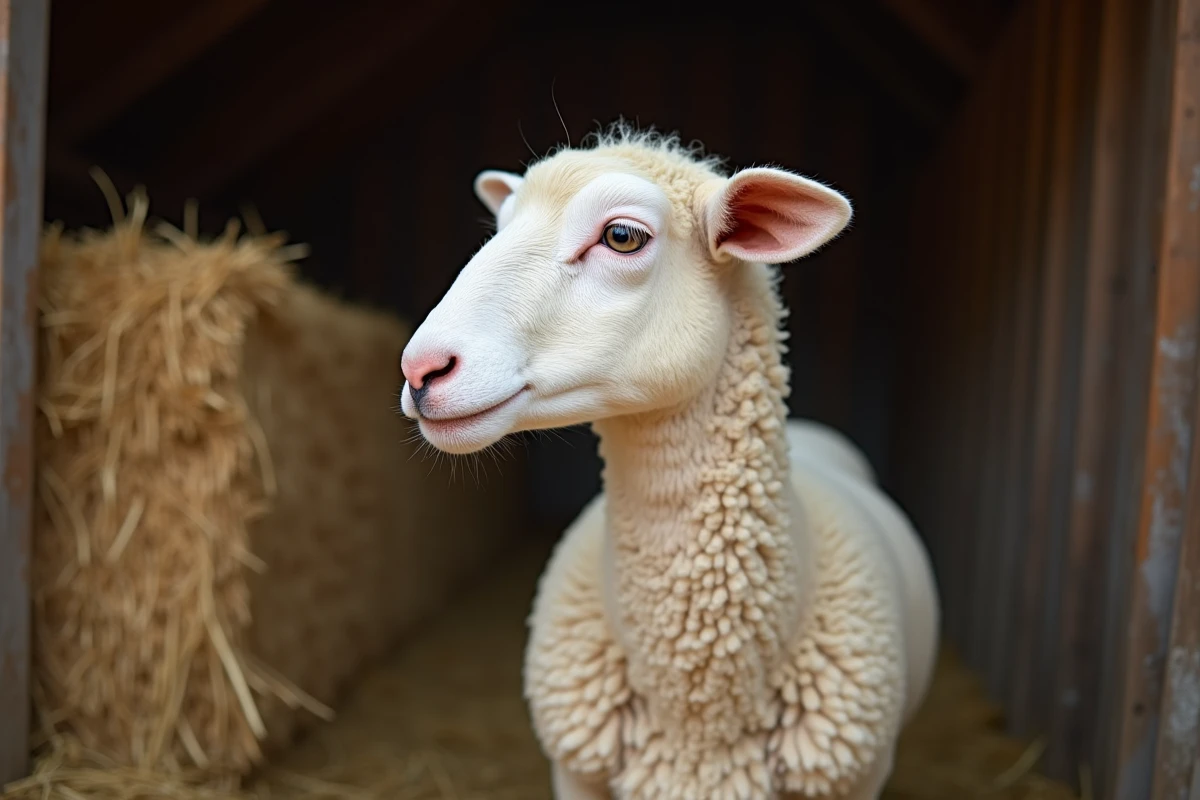
Exlana Sheep and the Regeneration of Degraded Pastures in Marginal Areas
Marginal lands, wastelands, sloped plots, or soils depleted by decades of monoculture present a challenge for French agriculture. Most meat sheep breeds, selected for productivity in intensive systems, adapt poorly to these poor environments.
The Exlana presents a different profile. Its forage versatility allows it to utilize a variety of plant resources, including coarse grasses and weeds that other breeds neglect. Breton farmers surveyed in the journal Fourrages (n°245, January 2026) report a significant reduction in winter feeding costs in grazing systems thanks to this adaptability.
From an agro-ecological perspective, grazing by Exlana on degraded pastures could promote several regeneration mechanisms:
- Moderate trampling stimulates contact between seeds and soil, facilitating the germination of native pasture species without mechanical tillage.
- Animal droppings spread across the entire plot provide gradual organic fertilization, unlike concentrated applications of chemical fertilizers.
- Selective grazing of dominant species reduces plant competition and allows less vigorous plants to establish, thereby increasing floral diversity.
The available data do not yet allow for precise quantification of the Exlana’s impact compared to other hardy breeds on soil restoration. Field reports vary on this point depending on local pedoclimatic conditions. That said, the potential is sufficiently documented to justify larger-scale experiments.
Registration of the Exlana in France and CAP Aid: The Regulatory Framework
An administrative turning point was reached with the official registration of the Exlana in the register of endangered breeds in France in 2025, by decree of February 15, 2025, published in the Official Bulletin of the Ministry of Agriculture and Food Sovereignty. This recognition opens access to preservation aids provided by the Common Agricultural Policy (CAP).
Specifically, farmers maintaining an Exlana flock can apply for specific subsidies aimed at the conservation of low-population breeds. This financial mechanism changes the game for a breed that is still marginal in French territory.
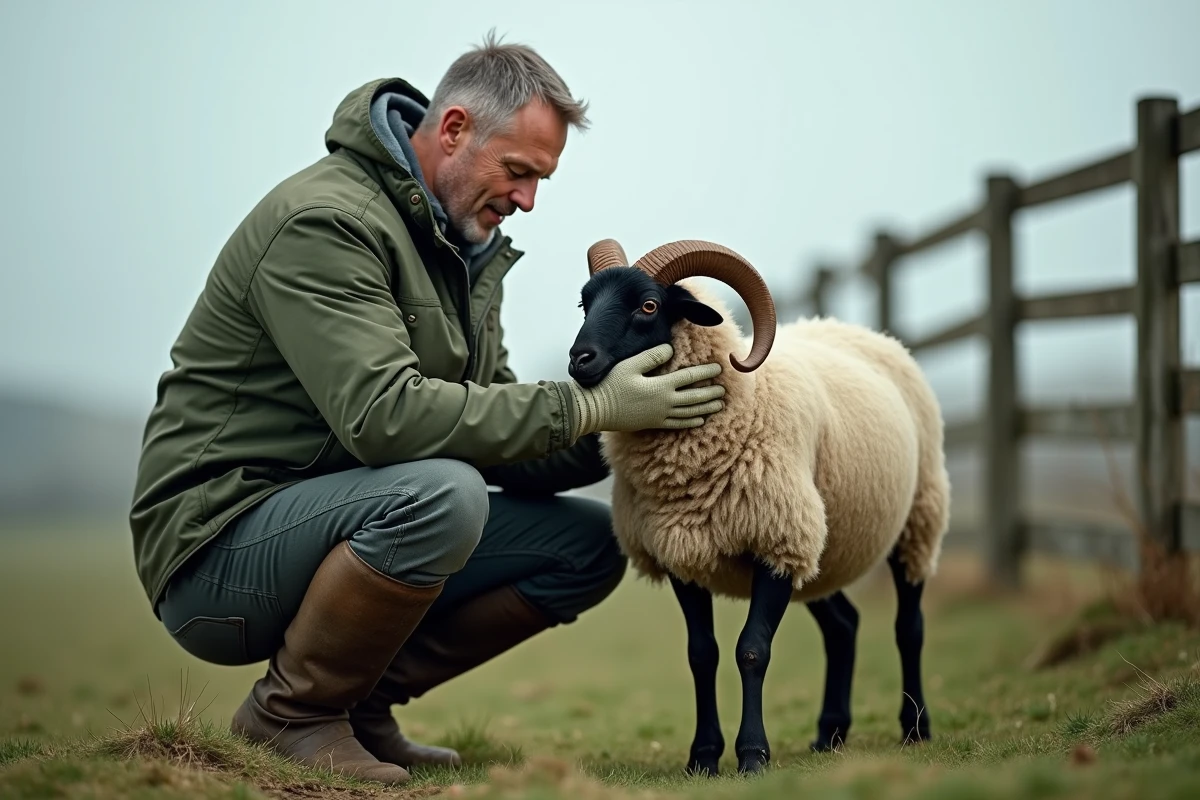
Genealogical Register and Structuring of the Sector
Since 2024, registrations in the genealogical register of the Exlana have seen a notable increase in Europe. This trend reflects an interest that extends beyond the circle of pioneering breeders to include farms in conversion or seeking diversification.
The structuring of a French sector remains embryonic. Unlike wool breeds that benefit from established valorization circuits (shearing, textile processing), the Exlana is positioned on an economic model centered around meat and ecosystem services. The absence of shearing eliminates a labor requirement, but also a supplementary income, necessitating a rethink of the profitability model.
Absence of Shearing and Impact on the Wool Sector: A Conscious Choice
The natural shedding of fleece in the Exlana eliminates the need for shearing, an operation that requires increasingly rare and costly professional shearers. For farmers with small flocks, this logistical gain is considerable.
However, this characteristic raises the question of the Exlana’s place in a French sheep market historically structured around wool. The biosourced materials and thermal insulation sectors seek local supplies. By definition, the Exlana cannot contribute to this.
This positioning necessitates evaluating the breed on other criteria:
- The meat quality, deemed satisfactory by initial farmer feedback, without standardized comparative data at this stage.
- The environmental value of extensive grazing, which could be monetized through payments for ecosystem services or “responsible” labels.
- The overall reduction of the carbon footprint related to the absence of transport and processing of wool.
Choosing the Exlana is therefore not neutral. It reflects a vision of sheep farming where the elimination of human intervention on the fleece frees up time and resources for other aspects of flock management.
The Exlana breed will not replace wool breeds or large French meat breeds. Its niche lies in extensive systems, marginal areas, and farms seeking an autonomous animal with low input needs. The regulatory framework in France, now in place, provides interested farmers with a financial lever to test this approach. The coming years will determine whether the Exlana finds its sustainable place in the French sheep landscape or remains confined to niche use.