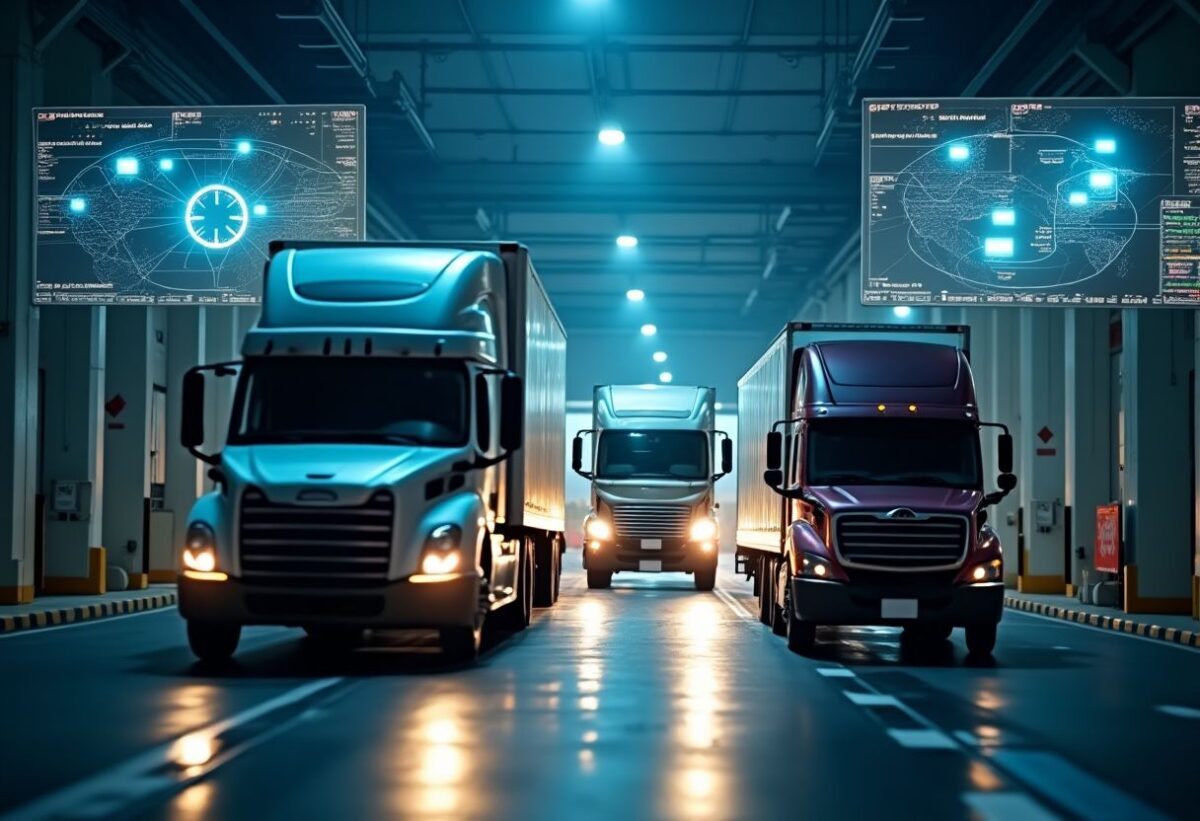
Managing a fleet of vehicles is a major challenge for all companies that depend on logistics. Fleet tracking has become an essential tool for optimizing vehicle management, improving safety, reducing operational costs, and increasing efficiency. In the face of fierce competition and economic pressures, companies must equip themselves with innovative technologies to remain competitive. Fleet tracking not only allows for real-time monitoring of vehicles but also provides valuable data for making informed decisions. In a world where every second counts, investing in such a solution can turn logistical challenges into strategic advantages.
The Benefits of Fleet Tracking
Integrating a fleet tracking system into daily operations management brings a multitude of advantages that enhance a company’s overall performance.
First of all, cost reduction plays a fundamental role. By monitoring fuel consumption, companies can identify and eliminate inefficiencies, thus contributing to substantial savings.
Next, improving safety is another key advantage. Thanks to the ability to track the location of vehicles in real-time, companies can respond quickly to emergencies and ensure the safety of drivers.
Moreover, this technology promotes optimized planning, allowing for reduced downtime and increased productivity.
Finally, it ensures greater transparency, which builds customer trust, a major asset in customer loyalty.
Current Trends in Fleet Tracking
Fleet tracking is constantly evolving thanks to technological advancements, and several trends are currently emerging.
- IoT and Connectivity: IoT devices enable continuous interconnection between vehicles and the central system, providing real-time data on vehicle status.
- Electrification: More and more fleets are adopting electric vehicles. Fleet tracking is essential for monitoring battery range and planning recharges.
- Artificial Intelligence: AI is used to analyze collected data, allowing for precise predictions and optimizations of routes.
- Automation: Automated processes reduce errors and increase operational efficiency.
Practical Applications of Fleet Tracking
Fleet tracking finds its utility in many sectors, where it is used to maximize operational efficiency.
In the delivery sector, technology enables precise routing of packages, thereby improving customer satisfaction.
Passenger transport companies benefit from real-time route management, thus avoiding delays and optimizing travel time. The construction sector uses these systems to monitor the usage of equipment, which helps reduce downtime and better plan projects.
Finally, for the utility sector, this system facilitates preventive maintenance, ensuring that vehicles are always ready to be deployed.
Choosing the Right Fleet Tracking Solution
To fully leverage this technology, it is essential to choose a solution tailored to the specific needs of the company.
- Assess operational needs: Identify the specific goals and challenges that the solution must address.
- Consider compatibility: Ensure that the system is compatible with existing vehicles and infrastructure.
- Think about scalability: Choose a solution that can evolve with the company’s growth.
- Analyze the cost-effectiveness: Compare the potential benefits to the cost of implementing and maintaining the system.
Incorporating these considerations into the decision-making process ensures successful adoption and optimal use of a fleet tracking.