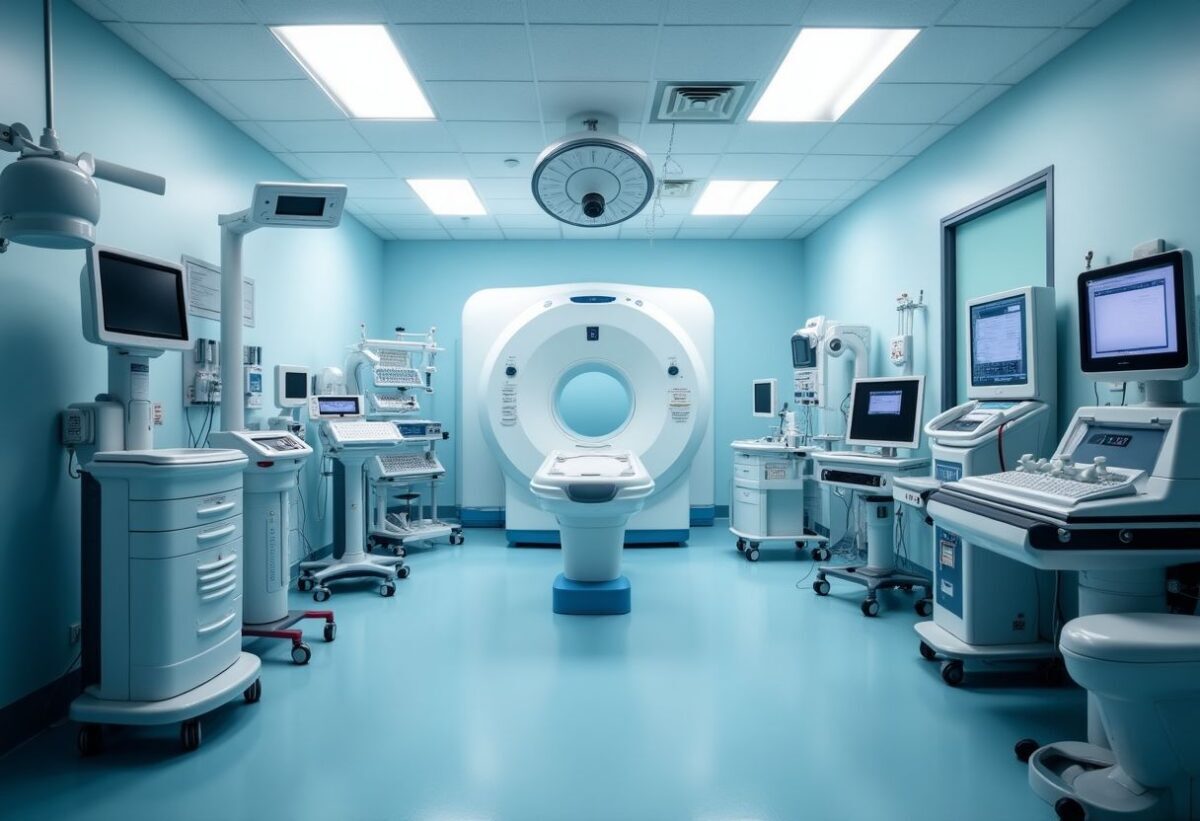
Medicine relies on a vast technological infrastructure that supports every aspect of healthcare. Whether it is about accurate diagnostics, complex surgical procedures, or patient care, medical equipment is the fundamental element that ensures the proper functioning of the healthcare system.
Indeed, without this technological arsenal, the medical advancements we take for granted today would simply not be possible. From the sterile syringe used for vaccinations to sophisticated diagnostic devices like MRI scanners, each piece of equipment plays a crucial role in the care journey. These tools, both simple and complex, are the result of years of research and innovation. They symbolize the unwavering commitment of medicine to improve the quality of life.
The Evolution of Medical Equipment: A Journey Through Time
The history of medical equipment is marked by discoveries and innovations that have transformed the art of healing. From the rudimentary instruments of early civilizations to today’s cutting-edge technologies, the evolution has been spectacular.
- The First Medical Tools: Antiquity saw the use of stones and metals to create basic surgical tools. These instruments, although primitive, were essential to the medical practice of the time.
- The Industrial Revolution: This period marked a decisive turning point. The rise of mass production allowed for the creation of more precise and diverse instruments.
- The Digital Age: Today, digital innovations are transforming the sector. Connected devices and artificial intelligence are redefining the standards of modern medicine, offering more precise and personalized solutions.
The Different Types of Medical Equipment: A Diversity in Service of Care
Medical equipment encompasses a wide range of devices, each designed to meet specific needs in the context of care.
Diagnostic devices, for example, include everything that contributes to identifying diseases. Ultrasound machines, electrocardiograms, and MRIs allow for visualization of the inside of the human body without invasive intervention. They play a crucial role in early detection and monitoring of pathologies.
Therapeutic equipment, on the other hand, is used to directly treat patients. Ventilators, infusion pumps, and dialysis machines are some examples of devices that support vital functions and improve the well-being of patients in treatment.
Next, surgical instruments remain the faithful allies of practitioners during procedures. Scalpels, forceps, and other precision tools ensure that procedures are carried out successfully and safely.
The Challenges and Innovations in the Sector
In the field of medical equipment, challenges are numerous, but they also give rise to remarkable progress.
- Regulation: Ensuring the safety and effectiveness of equipment is a priority. The strict standards imposed by health authorities ensure that each device is reliable and safe for patients.
- Sustainability: In the face of growing environmental concerns, the sector is striving to develop more eco-friendly solutions. Innovation in recycling and the design of environmentally friendly materials is on the rise.
- Accessibility: Making medical equipment accessible to all is a major challenge, especially in less privileged regions. Mobile technologies and low-cost solutions are being explored to bridge these inequalities.
- Continuous Innovation: Technological progress continues to amaze. Nanotechnology, robotics, and 3D printing are opening up new promising perspectives for the future of medicine.