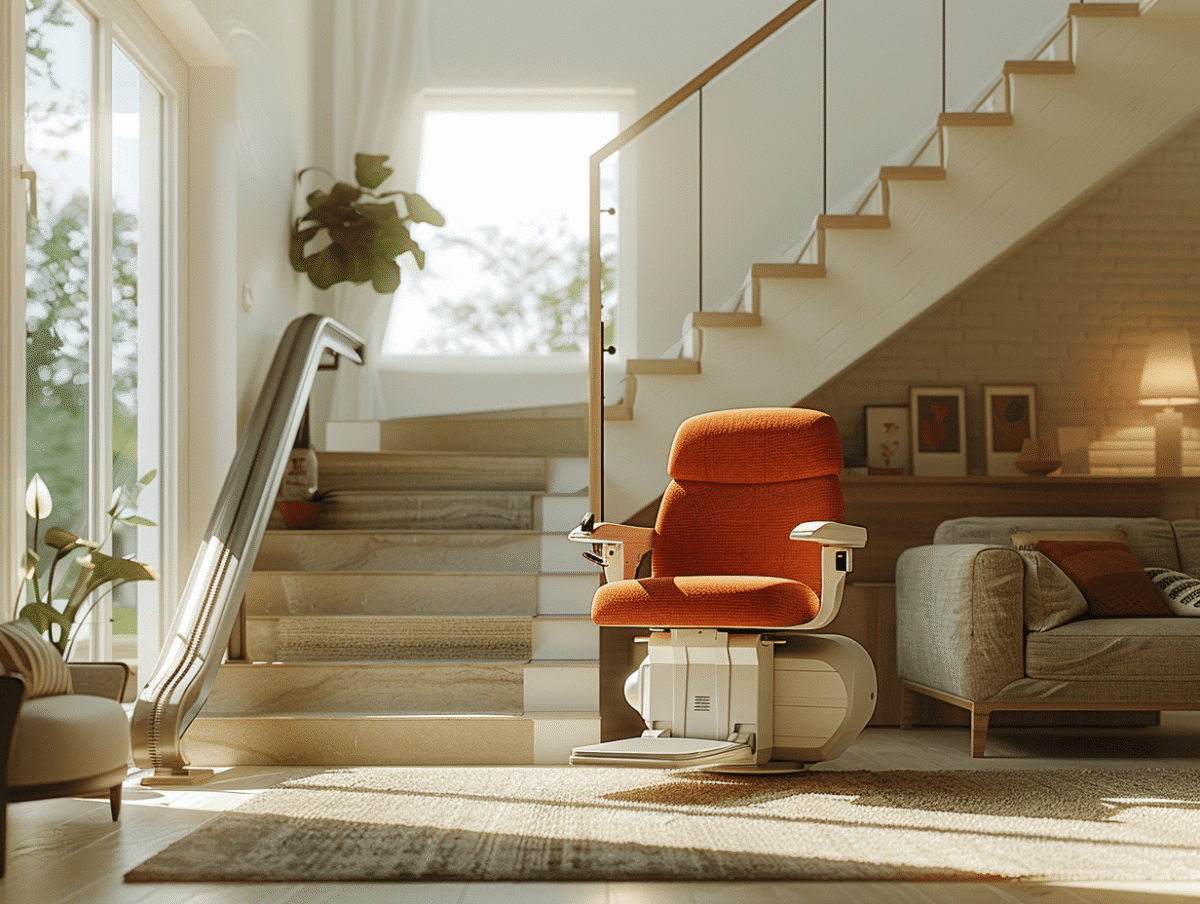
With the aging population, the issue of home mobility for seniors is becoming increasingly fundamental. For those living in multi-story homes, stairs represent a daily challenge, which can become a source of isolation or danger. Among the innovations designed to address this problem, the standing stairlift stands out. This device allows elderly individuals to move between the levels of their home while standing, offering an alternative to traditional seated models. Its design aims to encourage autonomy while taking into account the physical limitations associated with aging.
Improving seniors’ autonomy: the key role of the standing stairlift
The standing stairlift is emerging as a preferred solution for enabling seniors to remain at home. This device ensures better autonomy by overcoming the obstacle that stairs represent in daily life. The comfort of use and the security offered by the standing stairlift encourage elderly individuals to continue living actively in their usual environment.
The installation of an electric stairlift must respect the specificities of each home. Whether it is a straight or curved staircase, custom solutions exist to adapt to different configurations. These devices contribute to the mobility of seniors, allowing them to move between the different floors of their home without risk.
The suitability of the stairlift to the user’s needs is essential. Specialized companies offer services for evaluation by technical advisors to determine the most appropriate model. The standing stairlift becomes a true tool for maintaining the autonomy of elderly individuals, allowing them to retain their independence and comfort of life.
The cost of stair installation can be alleviated by dedicated financial aids. Tax credits, subsidies from Anah, or assistance from local authorities and mutual insurance companies are all mechanisms that facilitate access to this equipment. Considering these aids is crucial for enabling seniors to equip themselves with stairlifts and thus preserve their autonomy.
Installation and financing: practical guide for the standing stairlift
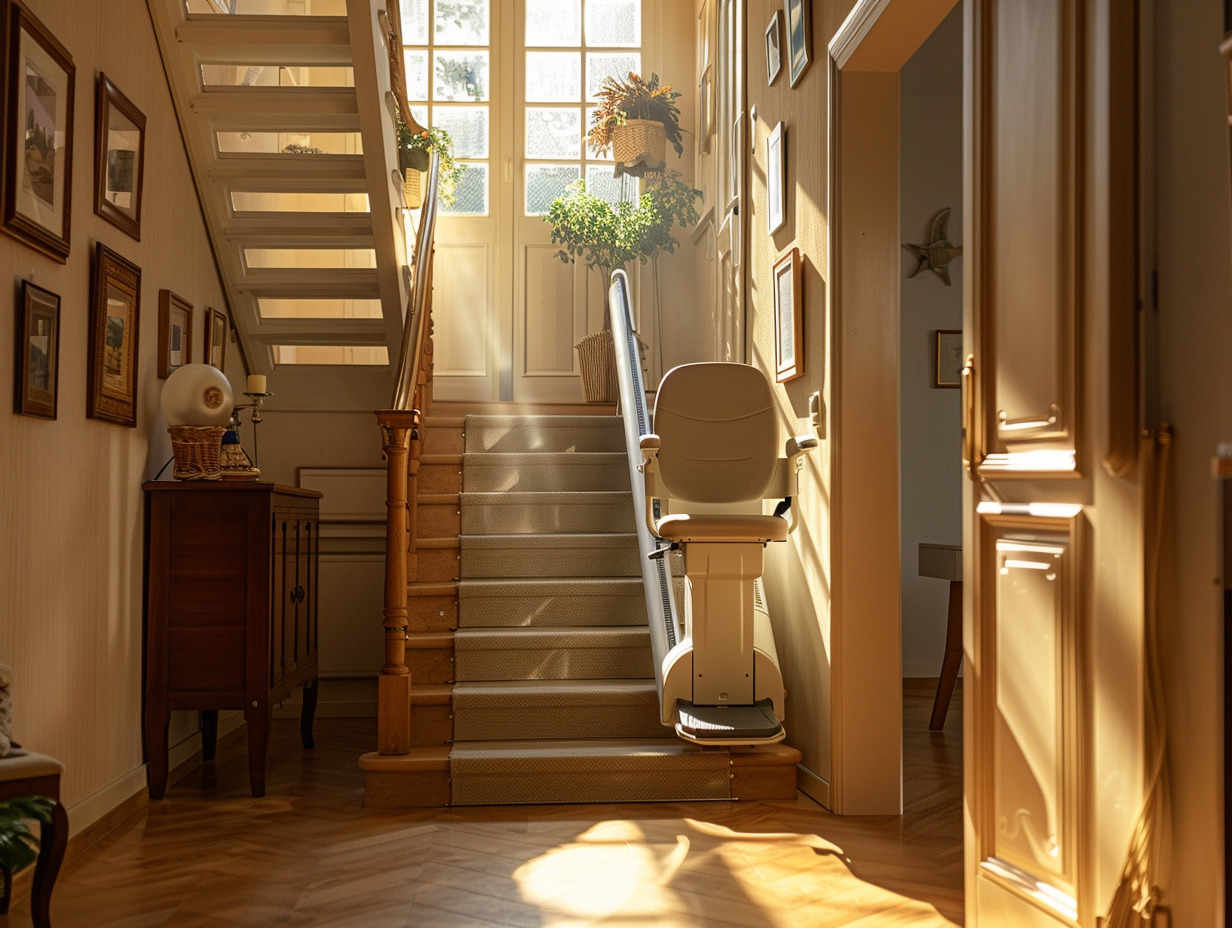
The installation of a stairlift requires the intervention of qualified professionals, such as the expert technicians from specialized companies like Stannah. They assess the specifics of the home for a custom adaptation. The process often includes a home visit, followed by a personalized quote. The goal is to ensure that the stairlift meets the user’s needs precisely while respecting the structural constraints of the housing.
The financing of this equipment can benefit from several financial aids. The reduced VAT on stairlifts, as well as the tax credit for adapting housing for elderly or disabled individuals, significantly reduce the cost for the buyer. Organizations such as Anah or platforms like Bonjour senior review applications to grant suitable subsidies. Aids such as the APA (Personalized Autonomy Allowance) and the PCH (Disability Compensation Benefit) can be mobilized to financially support the installation.
Institutions like the CAF, local authorities, and certain mutual insurance companies also offer their support. The latter may provide loans or participate in financing the installation of an indoor stairlift. Seniors or their relatives are advised to inquire with these entities to understand eligibility conditions and application procedures. Consider this information as a guide initiating the journey towards preserved mobility and an easier daily life.