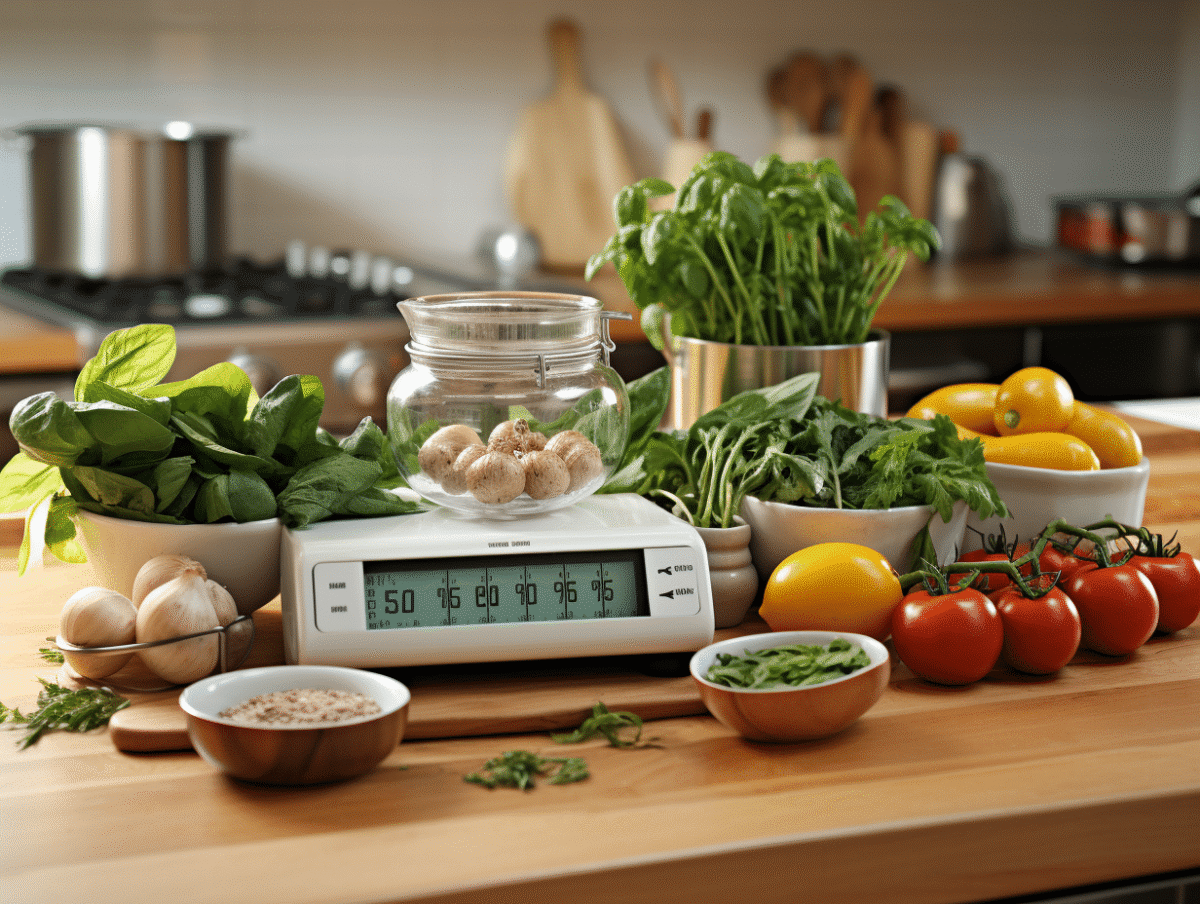
In cooking, the precision of measurements can be the key to a successful recipe. However, facing different units of measurement can turn into a real headache. Between teaspoons, American cups, and grams, the conversions needed to follow a recipe to the letter can quickly discourage even the most persistent cooks. Fortunately, there are simple tips and tools to navigate between the metric and imperial systems, ensuring that each ingredient is measured accurately for a perfect execution of your favorite dishes.
Understanding and mastering measurement units in cooking
Cooking and mixology require a rigorous use of measurement units. These scientific disciplines of culinary art and beverage creation use three main categories of units: volume, weight, and temperature. For example, volumes are often expressed in liters (l), milliliters (ml), or centiliters (cl), while weights are measured in kilograms (kg), grams (g), or ounces (oz). Temperature, on the other hand, is measured in degrees Celsius (°C) or degrees Fahrenheit (°F). Precision in these measurements is fundamental, as a conversion error can alter the taste, texture, or appearance of dishes and cocktails.
Recipes, whether culinary or mixology, are based on this imperative of precision. Knowing the exact content of a tablespoon, which varies from 15 ml in France to 20 ml in the United States, is essential to respect the delicate proportions that make up the heart of a preparation. Consider that an incorrect conversion, such as approximating ‘400 ml to grams’ without taking into account the density of the ingredient, can be fatal for the balance of a recipe.
Conversion errors are common pitfalls for cooks and mixologists. Approximations and ‘rough estimates’ lead to failures, compromising the success of recipes. Prevent these errors by using reliable conversion tools and systematically checking the measurement units according to the country of origin of the recipe. A traditional dish or cocktail can reveal its nuances and finesse, true to its cultural heritage.

Techniques and tools for converting measurements accurately
In the culinary arsenal, the use of specific conversion tools serves as a guarantee of reliability. Mobile applications, dedicated websites, recipe books, and practical guides provide a range of resources to navigate between measurement systems. These tools, often designed to meet the specific needs of cooks and mixologists, help avoid conversion errors that can alter the quality of preparations.
Measuring utensils and instruments prove to be indispensable allies in the delicate art of cooking and mixology. Whether it’s a measuring cup that marks different units of measurement, an exceptionally precise kitchen scale, or a reliable kitchen thermometer, these instruments contribute to the precision required for successful recipes. Measuring spoons, in particular, offer standardized measurements and are crucial for small quantities of ingredients.
In the absence of a specific tool, manual conversion tips can be useful. Knowing a few simple equivalents, such as the correspondence between milliliters and grams for ingredients like water or milk, can help in unexpected situations. However, these tips cannot replace the precision of measuring instruments suited to the demands of gastronomy and mixology.
The success of a recipe often hinges on mastering conversions between different measurement units. With a conversion chart at hand and a kitchen scale, choose tools that ensure flawless accuracy. Keep in mind that the ability to convert measurements reliably is one of the fundamental skills for any amateur or professional in cooking and mixology.