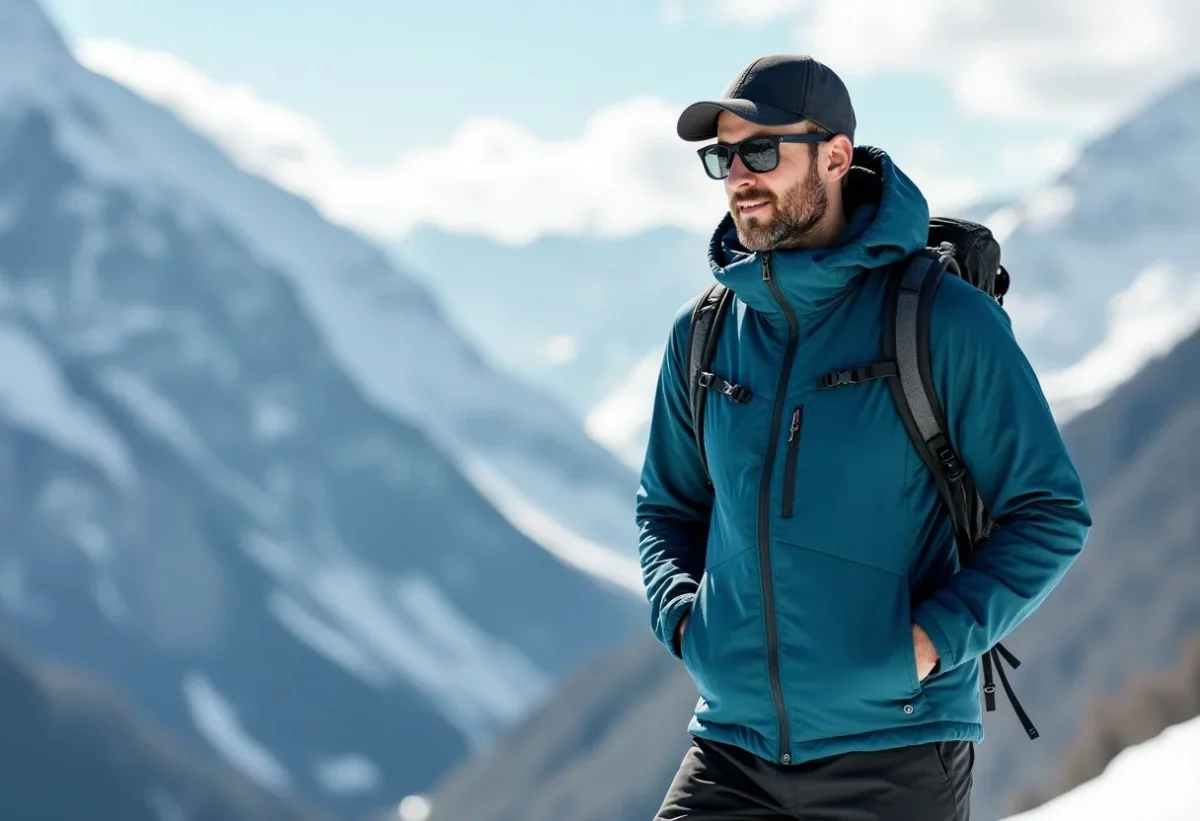
When winter settles on the rugged peaks and the biting cold takes hold of the mountains, a crucial question arises for all enthusiasts of snowy heights: how to choose the perfect “down jacket” to brave the worst weather conditions while staying warm and comfortable? Hikers, skiers, and climbers know that equipment is essential for a successful mountain adventure. With a multitude of models available on the market, featuring innovative technologies and diverse materials, it can be difficult to navigate. What aspects should be prioritized when purchasing a mountain down jacket? Between insulation, waterproofing, breathability, and weight, each element is of paramount importance to ensure your comfort and safety during your alpine escapades.
Materials and insulation: a determining choice
At the core of every down jacket are the materials and insulation, which play a fundamental role in the garment’s ability to retain heat while providing protection against the elements.
- Natural Down: Goose or duck down is renowned for its superior insulating power. Lightweight and compressible, it offers unmatched warmth but can lose its effectiveness in humid conditions.
- Synthetic: Synthetic fibers, such as PrimaLoft, mimic natural down while providing better water resistance. They tend to be a bit heavier but maintain their insulating capacity even when wet.
- Hybrids: Some down jackets combine down and synthetic materials to offer the best of both worlds, maximizing insulation and performance in various conditions.
Waterproofing and breathability: mastering the elements
The mountain does not forgive, and a good down jacket must be able to withstand snow, rain, and wind without compromising your comfort.
Waterproof and breathable membranes, such as GORE-TEX, are excellent allies for repelling moisture while allowing sweat vapor to escape.
Thanks to them, you stay dry from the inside and the outside. Water-repellent treatments applied to the outer fabric are also essential to prevent water from penetrating the down jacket.
Ensure that the waterproofing of your mountain down jacket is adequate for the conditions you expect to face.
Particular attention should be paid to seams and zippers, which are often weak points through which moisture can infiltrate.
Weight and compressibility: travel companions
In the vastness of the mountains, every gram counts. Thus, the weight and compressibility of your down jacket are elements not to be overlooked.
- Lightweight Down Jacket: a Lightweight Down Jacket is designed to be compact and easy to carry without sacrificing warmth.
- Compressibility: The ability of the down jacket to fold into a small volume is crucial for optimizing space in your backpack. Look for a down jacket that can be packed into its own pocket or a small compression sack.
- Balance: Finding the right balance between weight, warmth, and compressibility allows you to fully enjoy your alpine adventures without unnecessary bulk.
Fit and adjustment: comfort and freedom of movement
A well-fitted down jacket is essential to maximize its thermal efficiency and ensure your comfort during mountain activities.
The fit should be close enough to the body to avoid thermal bridges while providing enough room to wear additional layers underneath. Models equipped with drawstrings at the waist and adjustable cuffs allow for a customized fit according to your needs.
A well-designed collar covering the neck and an adjustable hood are also key elements to protect against icy wind gusts.
Finally, the design should facilitate a great freedom of movement, essential for activities such as skiing or climbing.